



Glyoxalase (GLO)
The glyoxalase system is critical for the detoxification of advanced glycation end-products (AGEs). AGEs are toxic compounds resulting from the non-enzymatic modification of biomolecules by sugars or their metabolites through a process called glycation. AGEs have adverse effects on many tissues, playing a pathogenic role in the progression of molecular and cellular aging.
The glyoxalase system consists of two cooperating enzymes named Glyoxalase 1 (Glo1) and Glyoxalase 2 (Glo2). Glo1 converts a non-enzymatically formed hemithioacetal, the adduct between an intracellular thiol such as glutathione (GSH) and a metabolically produced α-ketoaldehyde such as MG, into a thioester product . In the case of MG and GSH, S-D-lactoylglutathione is the product. Glo2 hydrolyzes this thioester into D-lactate and regenerates the intracellular thiol GSH. Glo1 and Glo2 work in tandem to convert cytoxic MG into D-lactate.
All Product Categories
-
Glyoxalase (GLO) Related Products (27)
Related Products (27)

-
Antibodies (1)
- 1
- 2
-
BrBzGCp2
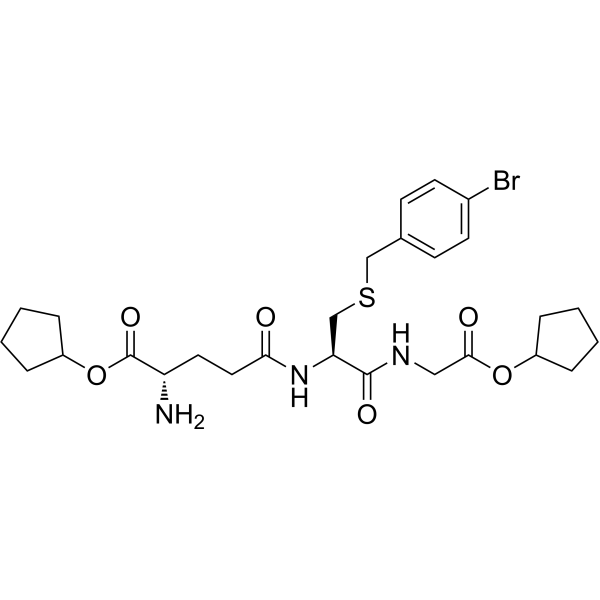 0 ImagesSynonyms: S-p-Bromobenzylglutathione cyclopentyl diesterBrBzGCp2 is a Glyoxalase 1 (GLO1) inhibitor, with a GC50 of 4.23 μM in HL-60 cells. BrBzGCp2 possesses antitumor and neuroprotective activity.
-
N,S-Bis-Fmoc-Glutathione
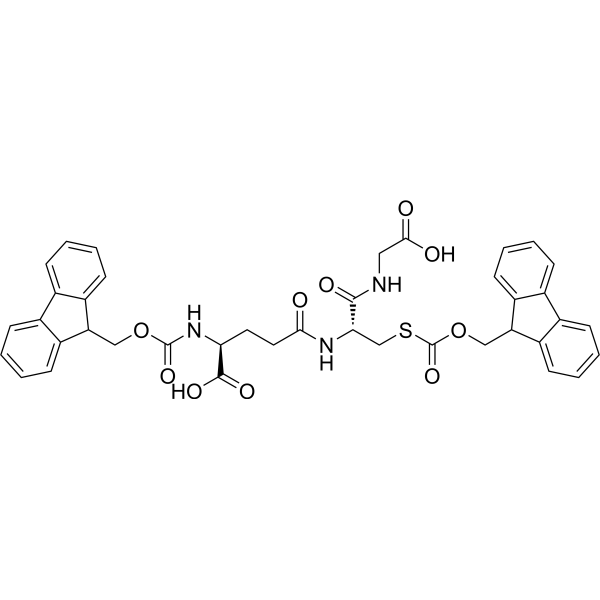 0 ImagesN,S-Bis-Fmoc-Glutathione is a potent glyoxalase II inhibitor with a Ki value of 0.75 μM and an IC50 of 2.5 μM.
-
S-Methylglutathione
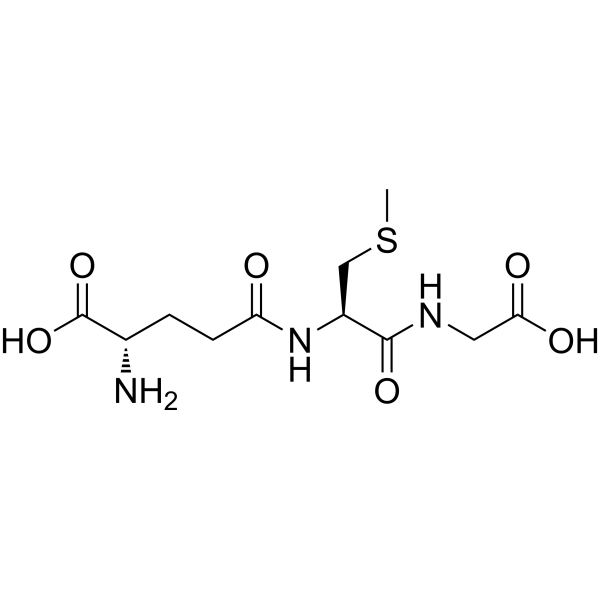 0 ImagesS-Methylglutathione is an S-substitued glutathione and a stronger nucleophile than GSH. S-Methylglutathione has inhibitory effect on glyoxalase 1.
-
Glyoxalase I inhibitor free base
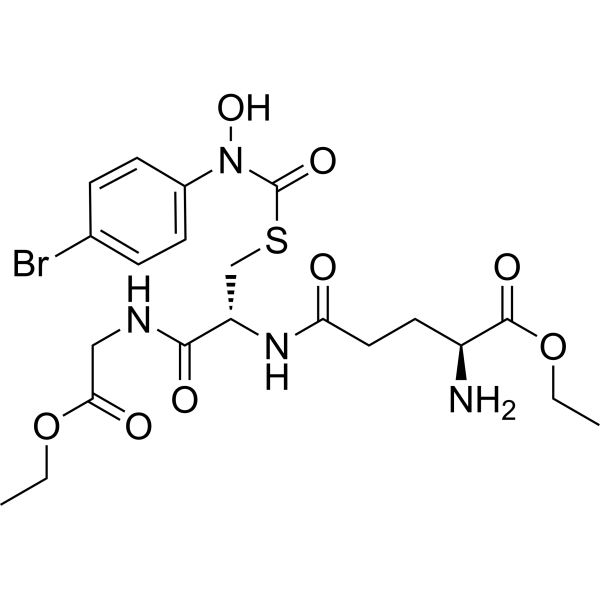 0 ImagesGlyoxalase I inhibitor free base (3(Et)2) is the inhibitor for glyoxalase I (GLO), and can be used in antitumor research.
-
S-D-Lactoylglutathione
 0 ImagesSynonyms: S-Lactylglutathione; (R)-S-LactoylglutathioneS-D-Lactoylglutathione (S-Lactylglutathione; (R)-S-Lactoylglutathione) is a multifunctional metabolic intermediate of the glyoxalase system. S-D-Lactoylglutathione activates K+ efflux in bacteria by displacing inhibitory glutathione from KefGB channels, thereby acidifying the cytoplasm. In eukaryotic cells, S-D-Lactoylglutathione mediates S-glutathionylation as a substrate of glyoxalase 2. S-D-Lactoylglutathione serves as a sensitive metabolic biomarker for neodymium nitrate neurotoxicity; when used in combination with MSCs-exo, it upregulates glutathione levels, downregulates lactate dehydrogenase and Glo2 levels, and inhibits cellular inflammatory responses and pyroptosis. S-D-Lactoylglutathione can be used in research related to prostate cancer, breast cancer, non-small cell lung cancer, sepsis-associated encephalopathy, and neurotoxicity.
-
TLSC702
 0 ImagesCat. No.: HY-117208CAS No.: 748786-57-4TLSC702 is a human glyoxalase I (hGLO I) inhibitor with an IC50 of 2.0 μM. TLSC702 inhibits the activity of human glyoxalase I, thereby leading to the accumulation of methylglyoxal and its derived advanced glycation end products. TLSC702 inhibits tumor cell proliferation, induces apoptotic morphological changes, internucleosomal DNA fragmentation and PARP cleavage in tumor cells. TLSC702 can be used in research related to leukemia and lung cancer.
-
Enzyme-IN-4
 0 ImagesCat. No.: HY-W842446CAS No.: 58265-74-0Enzyme-IN-4 is a competitive inhibitor of glyoxalase I that can be found in Stereum hirsutum. Enzyme-IN-4 has a Ki value of 4.6 μM against rat liver glyoxalase I.
-
SPB07393SC
 0 ImagesCat. No.: HY-181980CAS No.: 883054-47-5SPB07393SC is a glyoxalase-I (Glo-I) inhibitor with an IC50 of 11.1 μM. SPB07393SC is applicable for cancer research.
-
Indole-4-carboxaldehyde
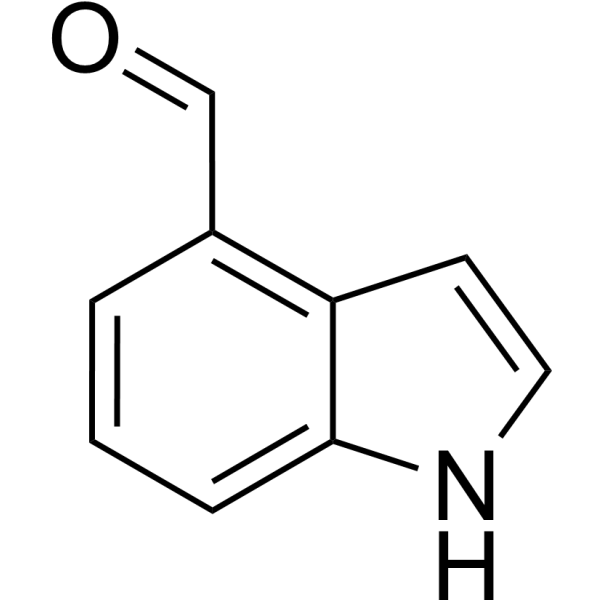 0 ImagesIndole-4-carboxaldehyde is an ergot alkaloid precursor that regulates glycosylation and inflammation. Indole-4-carboxaldehyde upregulates Glo-1, inhibits MGO-induced NF-κB activation, and suppresses MGO-induced expression of TNF-α and IFN-γ. Indole-4-carboxaldehyde inhibits MGO-induced formation of advanced glycation end products (AGE) and expression of their receptor (RAGE). Indole-4-carboxaldehyde is a core metabolite produced in the pedicels of Summer Black grapes after exogenous gibberellin treatment, and it directly promotes fruit enlargement and fruit set of Summer Black grapes. Indole-4-carboxaldehyde can be used in studies related to hepatic steatosis and plant growth regulation.
-
N,S-Bis-Fmoc-Glutathione TFA
 0 ImagesCat. No.: HY-P4277APurity: 98.08%N,S-Bis-Fmoc-Glutathione TFA is a potent glyoxalase II inhibitor with a Ki value of 0.75 μM and an IC50 of 2.5 μM.
-
S-Sulfo-DL-cysteine-d3
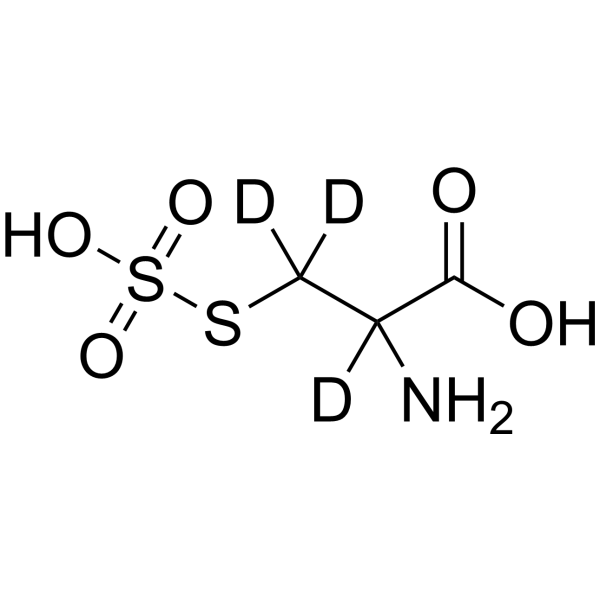 0 ImagesS-Sulfo-DL-cysteine-2,3,3-d3 is the deuterium labeled S-Sulfo-DL-cysteine-2,3,3.
-
Glyoxalase I inhibitor 5
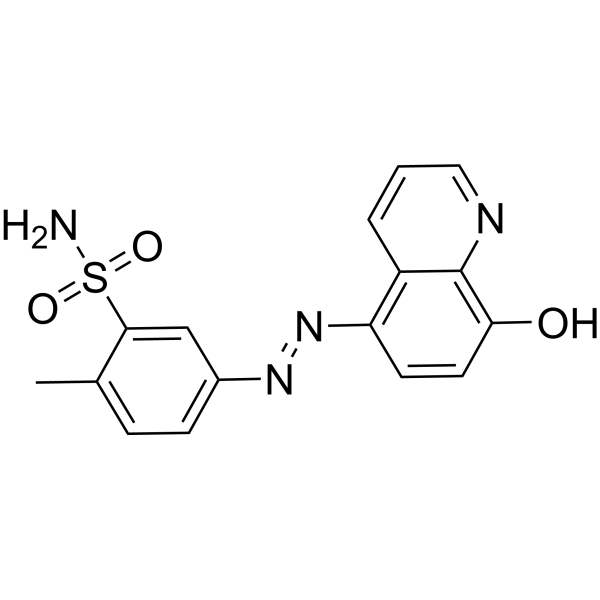 0 ImagesGlyoxalase I inhibitor 5 (Compound 9h) is a glyoxalase I (Glo-I) inhibitor with an IC50 of 1.28 μM. Glyoxalase I inhibitor 5 can be used as anticancer agent.
-
2-Dimethylaminophenol
 0 Images2-Dimethylaminophenol is an inhibitor of human glyoxalase 1 (GLO1). 2-Dimethylaminophenol disrupts metal binding by substituting the pyridine nitrogen donor with a dimethylamino group.
-
Glyoxalase I inhibitor
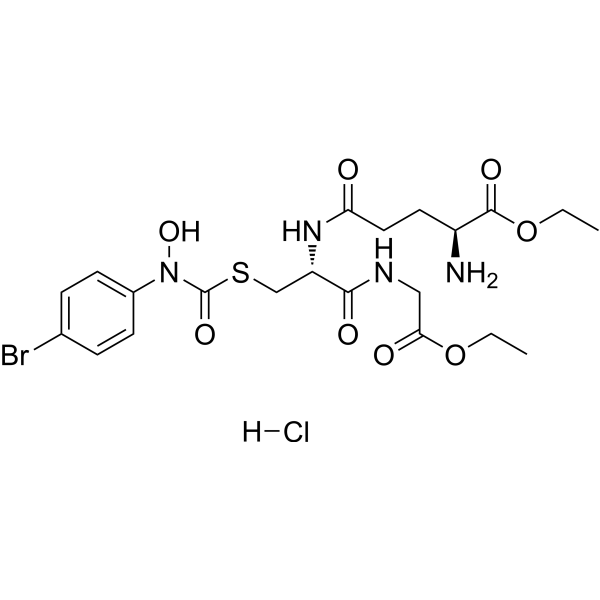 0 ImagesCat. No.: HY-15167CAS No.: 221174-33-0Glyoxalase I inhibitor (3(Et)2) is the inhibitor for glyoxalase I (GLO), and can be used in antitumor research.
-
Glyoxalase I inhibitor 6
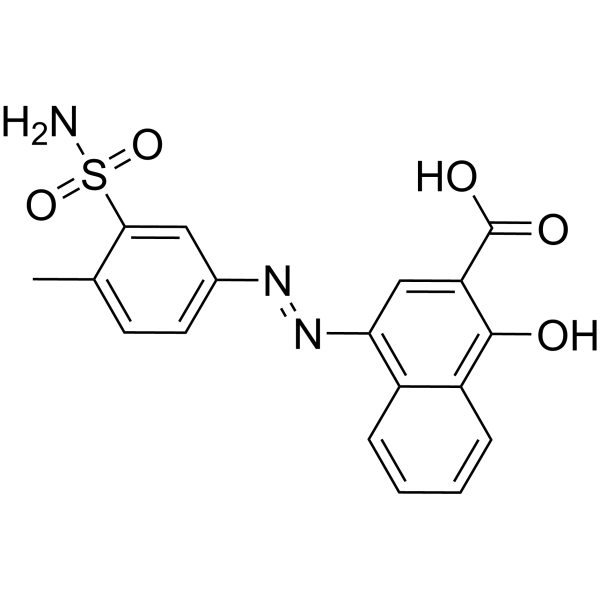 0 ImagesGlyoxalase I inhibitor 6 (Compound 9j) is a glyoxalase I (Glo-I) inhibitor with an IC50 of 1.13 μM. Glyoxalase I inhibitor 6 can be used as anticancer agent with low toxicity.
-
Glyoxalase I inhibitor 3
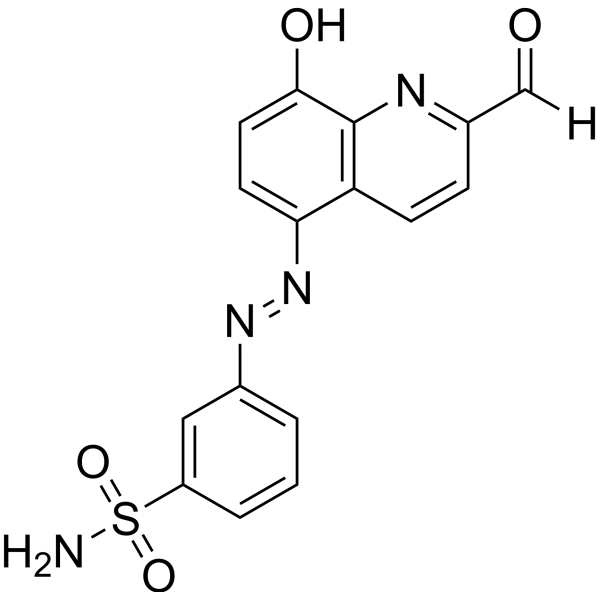
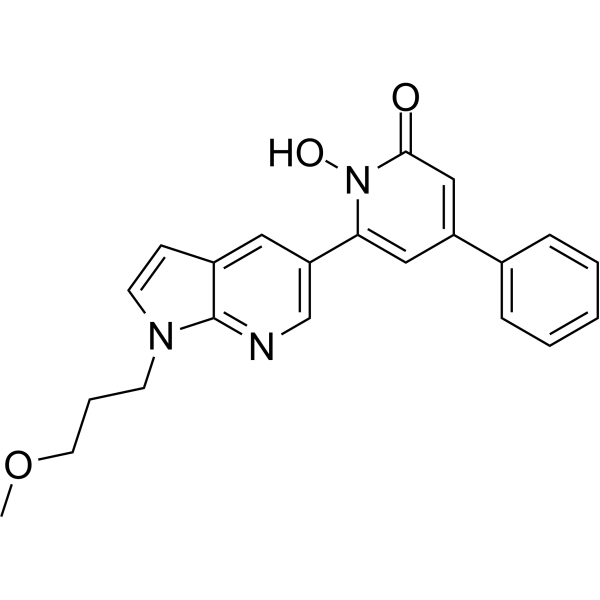 0 ImagesGlyoxalase I inhibitor 3 (compound 22g) is a potent glyoxalase I (GLO1) inhibitor with an IC50 of 0.011 µM. Glyoxalase I inhibitor 3 has the potential for the research of depression and anxiety.
-
Glyoxalase I inhibitor 7
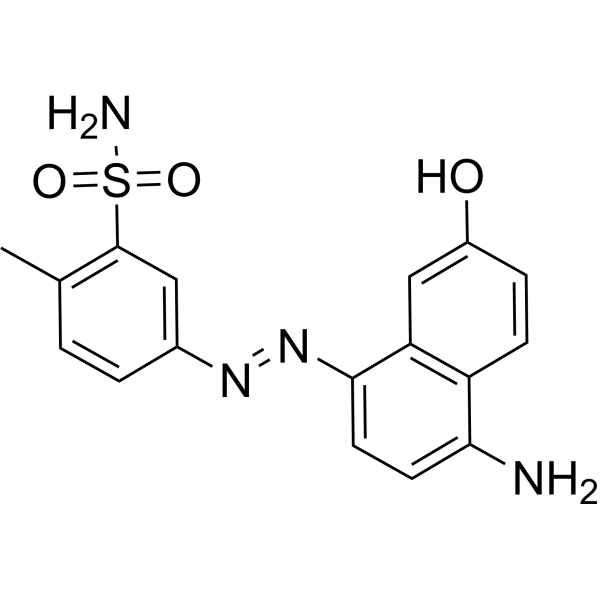 0 ImagesCat. No.: HY-147649CAS No.: 2455508-31-1Glyoxalase I inhibitor 7 (Compound 6) is a glyoxalase I (Glo-I) inhibitor with an IC50 of 3.65 μM. Glyoxalase I inhibitor 7 can be used as anticancer agent.
-
COMC-6
 0 ImagesCat. No.: HY-153154CAS No.: 106281-45-2Synonyms: 2-Crotonyloxymethyl-2-cyclohexenoneCOMC-6 is an anticancer agent and can be used for study of cancer.
-
Glyoxalase I inhibitor 4
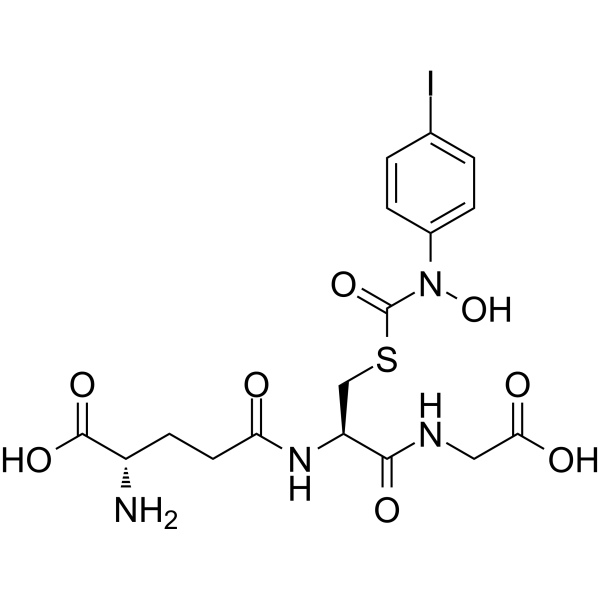 0 ImagesCat. No.: HY-146656CAS No.: 250155-72-7Glyoxalase I inhibitor 4 (compound 14) is a potent glyoxalase I inhibitor with an Ki of 10 nM.
- 1
- 2




